On this page
What Is Socket?
A socket is a communication endpoint that allows two devices or applications to exchange data over a network. In software development, sockets enable real-time, two-way communication between a client (web browser, mobile app, desktop application) and a server.
Unlike traditional HTTP requests, where the client sends a request and waits for a response, sockets maintain an open connection. This allows both the client and server to send data instantly whenever an event occurs.
For example, when a user sends a message in a chat application, everyone in the conversation receives it immediately without refreshing the page. This is possible through socket-based communication.
Benefits of Using Sockets
1. Real-Time Communication
Data is delivered instantly between users and servers without repeated API requests.
2. Low Latency
Sockets maintain a persistent connection, reducing communication delays.
3. Two-Way Data Flow
Both server and client can initiate communication at any time.
4. Reduced Server Overhead
Eliminates continuous polling, saving bandwidth and server resources.
5. Better User Experience
Users receive live updates, notifications, and synchronized content immediately.
6. Scalable Architecture
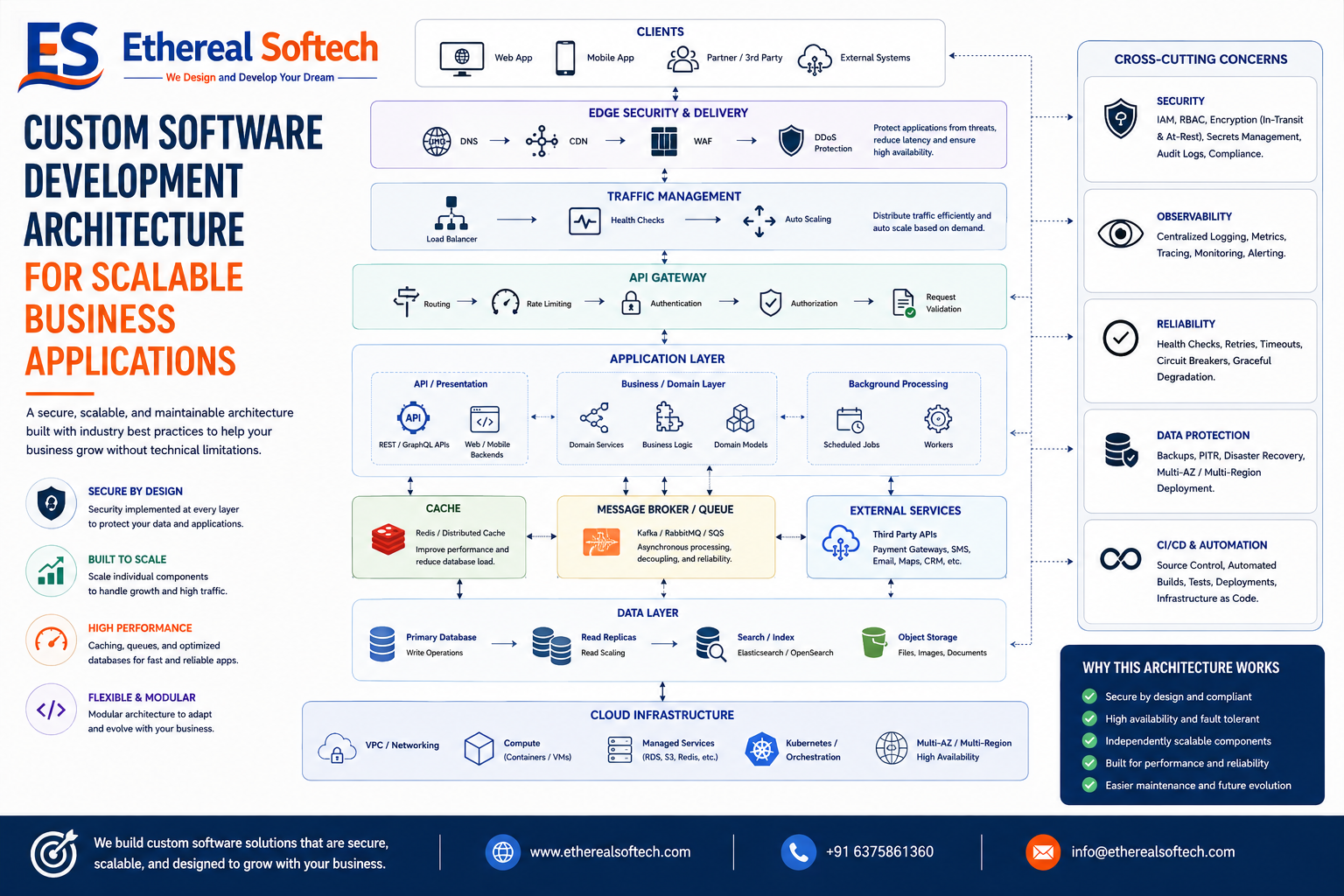
Works well with distributed systems using Redis Pub/Sub, Kafka, RabbitMQ, or cloud messaging services.
7. Cross-Platform Support
Sockets can be used with web applications, Android apps, iOS apps, desktop software, IoT devices, and smart TVs.
Industries and Use Cases
Sockets are suitable for any application requiring instant communication.
FinTech & Banking
- Live stock prices
- Trading platforms
- Payment status updates
- Fraud monitoring dashboards
- Account activity notifications
Healthcare
- Telemedicine
- Live patient monitoring
- Ambulance tracking
- Doctor consultation platforms
E-commerce
- Live order tracking
- Inventory synchronization
- Flash sale updates
- Customer support chat
Education
- Virtual classrooms
- Online quizzes
- Live attendance
- Collaborative whiteboards
Gaming
- Multiplayer games
- Matchmaking
- Leaderboards
- Live game state synchronization
Logistics
- Vehicle tracking
- Fleet management
- Delivery status
- Route optimization
Social Media
- Messaging
- Live comments
- Activity feeds
- Notifications
OTT & Streaming
- Live streaming
- Viewer count updates
- Chat during broadcasts
- Watch parties
IoT
- Smart home devices
- Industrial monitoring
- Sensor data streaming
- Remote equipment control
Enterprise Applications
- CRM notifications
- ERP dashboards
- Team collaboration
- Workflow automation
How Ethereal Softech Provides Socket-Based Solutions
At Ethereal Softech, we build scalable real-time applications using modern socket technologies based on business requirements. Rather than relying on a single technology, we select the most suitable solution for performance, scalability, and infrastructure goals.
Our expertise includes:
- Real-time chat applications
- Live location tracking
- Video conferencing platforms
- Telemedicine solutions
- Multiplayer gaming backends
- Live auction systems
- Financial trading dashboards
- Real-time analytics dashboards
- IoT communication platforms
- Customer support systems
- Live notifications
- Collaborative editing applications
- Streaming platforms
- Enterprise workflow systems
We work with technologies such as native WebSockets, Socket.IO, SignalR, MQTT, Redis Pub/Sub, Kafka, RabbitMQ, and cloud-based real-time messaging services to deliver secure and scalable communication systems.
Whether you’re building an MVP or an enterprise platform handling millions of events, our engineering team designs architectures that prioritize performance, reliability, and future scalability.
Frequently Asked Questions
1. What is the difference between HTTP and sockets?
HTTP follows a request-response model where the client must initiate communication. Sockets maintain a persistent connection, enabling both the client and server to exchange data instantly.
2. Is Socket.IO the same as WebSocket?
No. WebSocket is a communication protocol, while Socket.IO is a JavaScript library that adds features like automatic reconnection, event-based messaging, and fallback transport mechanisms.
3. Are sockets suitable for mobile applications?
Yes. Android and iOS applications commonly use sockets for messaging, live tracking, notifications, multiplayer gaming, and streaming.
4. Can sockets scale for enterprise applications?
Yes. With proper architecture using load balancers, Redis Pub/Sub, Kafka, RabbitMQ, or cloud messaging services, socket-based applications can support millions of concurrent connections.
5. Are sockets secure?
Yes. Secure socket connections use TLS encryption (WSS), along with authentication, authorization, and rate limiting to protect data transmission.
6. Which industries benefit most from socket technology?
Banking, healthcare, e-commerce, logistics, gaming, education, social media, IoT, streaming, and enterprise software all benefit significantly from real-time communication.
7. Can Ethereal Softech modernize an existing application with real-time features?
Yes. We can integrate socket-based communication into existing web or mobile applications without requiring a complete rebuild, enabling features such as live notifications, chat, tracking, dashboards, and collaborative workflows.